
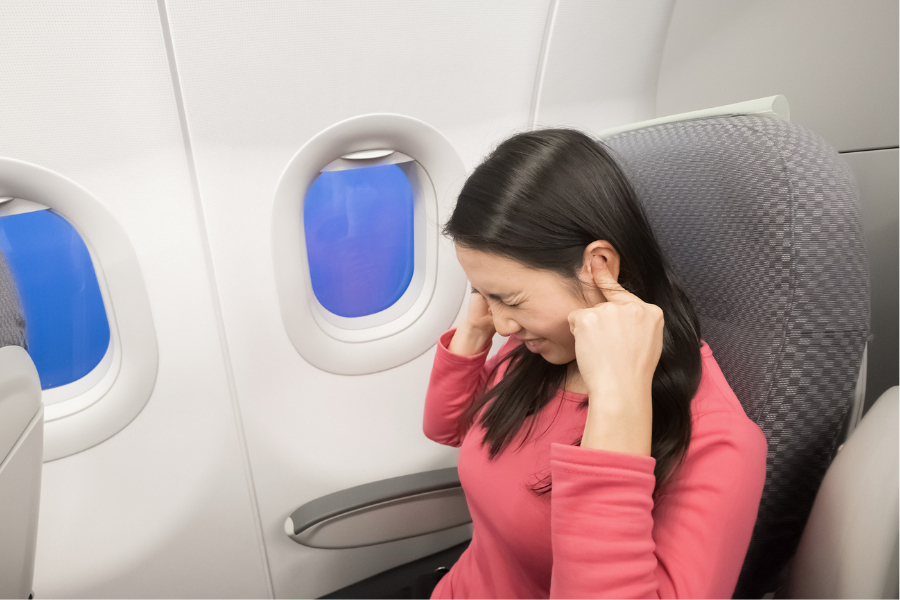
 For many adults in Montgomery and Bucks Counties, dealing with a clogged or muffled ear is a frequent nuisance. You might notice it most while taking off from Philadelphia International Airport, or when fighting a stubborn seasonal cold. You swallow, yawn, or try to pop your ears, expecting immediate relief.
But what happens when that stuffed-up pressure doesn’t go away? When the sensation of being underwater persists for weeks or months and it stops being a minor annoyance and becomes a chronic issue affecting your hearing and overall quality of life.
At Greater Philadelphia Ear Specialists, we see many patients who have spent months trying over-the-counter nasal sprays and allergy medications without success. If you are experiencing a persistent, unbreakable fullness in your ears, the root cause is frequently a condition known as Eustachian Tube Dysfunction, or ETD.
What is Eustachian Tube Dysfunction?
The Eustachian tube is a narrow canal connecting the middle ear space to the back of the nose. This small pathway acts as a pressure-regulating valve that performs three vital functions for your hearing health:
- Pressure Equalization: It opens briefly when you swallow or yawn, equalizing the air
pressure inside your middle ear with the atmospheric pressure around you. - Mucus Drainage: It acts as a natural drainage pathway, clearing normal secretions out of the middle ear space.
- Protection: It shields the delicate mechanics of the middle ear from unwanted pressure
shifts, bacteria, and nasal secretions.
When this tube becomes swollen, inflamed, or clogged, it fails to open properly. This malfunction is Eustachian Tube Dysfunction.
Without a functioning release valve, a vacuum forms inside the middle ear. The surrounding tissue begins to absorb the trapped air, causing the eardrum to pull inward (retract). This imbalance creates a sensation of pressure.
What Are The Signs That You Might Have ETD?
Because ETD directly disrupts the pressure environment of the middle ear, it typically triggers a range of symptoms, including:
- Muffled hearing: Sound waves struggle to pass cleanly through a retracted, pressure-
strained eardrum. - Popping or clicking sounds: These sounds occur as the narrowed tube unsuccessfully
attempts to force itself open. - Ear pain or discomfort: The continuous vacuum pressure pulls abnormally on the sensitive tissues of the eardrum.
- Tinnitus: A persistent ringing or buzzing sound inside the affected ear.
- A sensation of fluid or moving water: In chronic cases, the negative pressure pulls fluid out of the surrounding tissues, trapping it behind the eardrum.
Why Adults Develop Chronic ETD
While childhood ear issues are famously linked to short, horizontal Eustachian tubes, adult ETD stems from a different set of clinical challenges. Common underlying triggers include:
- Chronic Nasal Inflammations: Environmental allergies, lingering sinus infections, or vasomotor rhinitis can cause the lining of the Eustachian tube to swell shut.
- Anatomical Obstructions: Conditions like a severely deviated septum or nasal polyps
can disrupt natural airflow and drainage around the opening of the tube. - Barotrauma: Rapid pressure changes, such as from frequent flying or scuba diving, can
lock a vulnerable Eustachian tube into a collapsed position. - Laryngopharyngeal Reflux (LPR): Stomach acid traveling up to the back of the throat
can irritate and inflame the opening of the tube.
Moving Past The Over-the-Counter Cycle
When conservative, first-line treatments like steroid nasal sprays, antihistamines, or oral decongestants fail to resolve the blockage, it is time to seek an evaluation from an ear specialist. As a fellowship-trained, board-certified Otologist, Dr. Sean Larner provides highly specialized solutions tailored specifically to the complex mechanics of the adult ear.
For adults suffering from chronic ETD or recurring fluid retention, an exceptionally effective and efficient option is In-Office Ear Tube Placement (Myringotomy & Tympanostomy).
The Benefits of Adult In-Office Ear Tube Placement
- No General Anesthesia Needed: Over 95% of adult patients tolerate this procedure easily while completely awake. Dr. Larner applies a specialized, highly effective topical numbing agent directly to the eardrum, bypassing the risks, fasting requirements, and recovery times associated with general sedation.
- Rapid and Simple: The entire procedure takes less than 15 to 20 minutes right inside our comfortable office in Ambler. Most patients report being pleasantly surprised by how brief and painless the process is.
- Immediate Pressure Relief: By creating a microscopic opening and placing a tiny, hollow cylinder in the eardrum, we bypass the malfunctioning Eustachian tube entirely. Air instantly equalizes, trapped fluid is allowed to escape, and patients often experience a dramatic and immediate restoration of clear hearing.
- Zero Downtime: Because no heavy sedation is used, you can safely drive yourself to and from your appointment and return to work or normal daily activities the very same day.
The specialized tubes are designed to be entirely temporary. As your eardrum naturally heals and regenerates over 6 to 18 months, it will gradually and safely push the tiny tube out into the ear canal on its own, usually without you even noticing.
Schedule a Comprehensive Evaluation in Ambler
You do not have to live with muted hearing and constant ear pressure. If you have been struggling with a chronic clogged sensation that refuses to clear, a comprehensive evaluation under a high-powered otologic microscope can provide the definitive answers you seek.
Contact Greater Philadelphia Ear Specialists today at (215) 383-1333 to schedule your consultation with Dr. Sean Larner. Let us help you find lasting relief and reconnect with the clear world of sound around you.
Sources
- Mayo Clinic: Ear tubes (Tympanostomy tubes) – Overview and adult indications.
- Cleveland Clinic: Eustachian Tube Dysfunction.
This content is strictly for informational purposes and does not constitute medical advice.