
Hearing Restoration
Restoring Sound connections &Overcoming server hearing loss
Cochlear Implants at Greater Philadelphia Ear Specialists
For individuals living with severe-to-profound hearing loss, the world can feel increasingly isolated. When conventional hearing aids no longer provide enough clarity to understand speech, a different approach is needed. Traditional hearing aids simply make sounds louder, which is ineffective if the delicate hair cells inside the inner ear are extensively damaged.
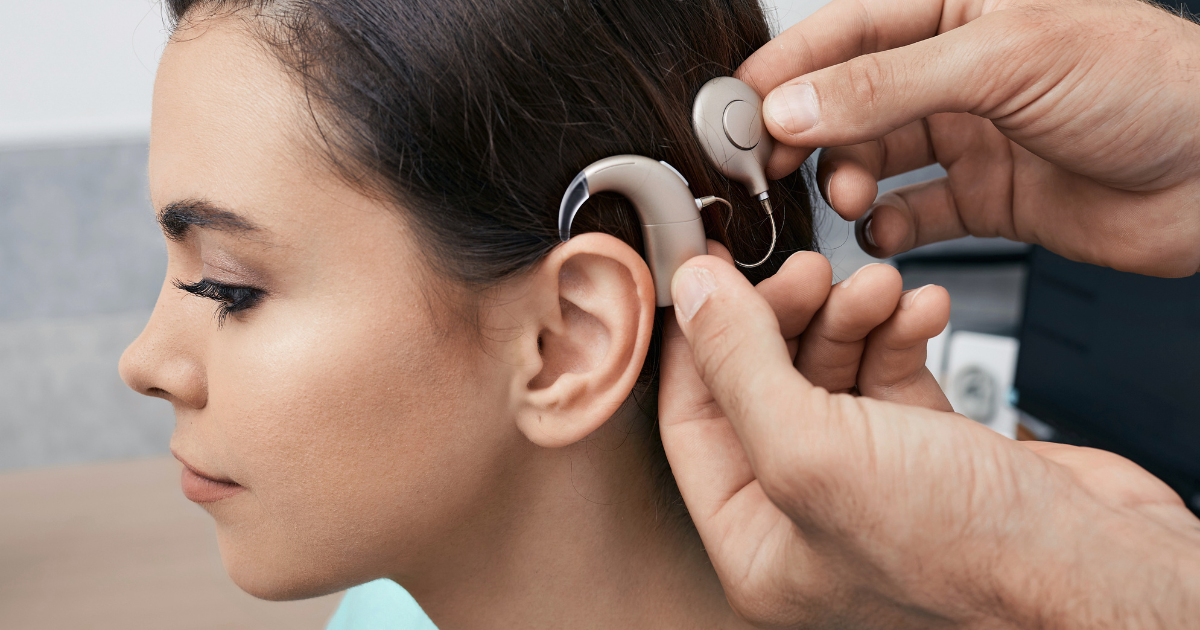
At Greater Philadelphia Ear Specialists, we offer advanced cochlear implant solutions to bypass damaged areas of the ear and directly stimulate the auditory nerve. Fellowship-trained otologist Dr. Sean Larner, D.O., provides highly specialized care to determine if a cochlear implant can help restore your connection to sound and improve your quality of life.
What is a Cochlear Implant?
A cochlear implant is a medical device designed for adults and children who receive little to no benefit from traditional hearing aids. Unlike a hearing aid which amplifies acoustic sound, a cochlear implant converts sound into patterned electrical signals. These signals stimulate the cochlear nerve, which the brain interprets as sound.
The device consists of two main parts:
- External Sound Processor: A small device worn behind the ear that captures environmental sound waves using directional microphones. It processes these acoustic sounds into digital data, which is sent across the skin via an external transmitter.
- Internal Implant Body: Surgically placed just beneath the skin behind the ear, this component contains a receiver-stimulator that receives the digital data. It sends precise electrical pulses down a thin, flexible electrode array carefully threaded inside the cochlea (the spiral-shaped inner ear structure).
Because our practice in Montgomery and Bucks Counties is 100% dedicated to advanced otology, neurotology, and audiology, we ensure that every surgery and device tuning session is designed exactly for your unique ears and nerves.
How Does a Cochlear Implant Work?
The journey from an environmental sound to your brain’s perception of speech occurs almost instantaneously through a highly structured technical sequence.
Step 1 Sound Capture
Microphones on the external sound processor pick up acoustic sounds and speech from the surrounding environment.
Step 2 Digital Processing
The processor filters out background noise and converts the acoustic sound waves into highly specific digital codes.
Step 3 Signal Transmission
The digital codes are transmitted through the air across the intact skin via the external transmitter coil to the internal receiver implanted beneath the skin.
Step 4Auditory Nerve Stimulation
The internal receiver transforms the digital code into electrical impulses and delivers them to the electrode inside the cochlea. These pulses directly bypass non-functioning hair cells to stimulate the fibers of the auditory nerve.
Step 5.Brain Interpretation
The auditory nerve carries these electrical signals up to the brain's auditory cortex, where they are recognized and interpreted as meaningful sound and speech.
Signs You May Be a Candidate for a Cochlear Implant
Cochlear implants are not a solution for all forms of hearing loss. They are specifically indicated for individuals with sensorineural hearing loss (damage to the inner ear or auditory nerve path) and who no longer achieve functional benefit from top-tier acoustic amplification.
You or a loved one may be a strong candidate for an evaluation if you experience the following:
- Feel that your hearing aids are “no longer working” or sounds remain muffled even at maximum volume.
- Heavily rely on lip-reading, context clues, or visual confirmation to follow a basic conversation.
- During professional audiological testing, your sentence recognition scores are less than or equal to 50% in the ear to be implanted (and less than or equal to 60% in the opposite ear) while wearing appropriately fitted hearing aids.
- Experience significant difficulty communicating over the telephone, even with specialized assistive attachments.
- Avoid social gatherings, restaurants, or family dinners because the effort to understand speech in noise is exhausting.
Cochlear Implant Evaluation and Surgical Process
Receiving a cochlear implant is a comprehensive process that blends medical evaluation, outpatient surgery, and structured audiological rehabilitation.
Comprehensive Pre-Surgical Evaluation
Before any procedure is scheduled, you will undergo a thorough diagnostic workup at our Ambler office. This includes:
- An advanced behavioral audiological battery to quantify exactly how much benefit you receive from optimized hearing aids
- Diagnostic imaging such as a CT scan or MRI is performed to evaluate the structural integrity of your cochlea and ensure the pathway for the electrode array is fully open.
Outpatient Surgical Procedure
The placement of the internal component is a routine, microscopic surgical procedure performed under general anesthesia. Dr. Sean Larner makes a small incision hidden behind the ear, creates a localized well in the bone to secure the receiver-stimulator, and delicately guides the electrode array into the fluid-filled chambers of the cochlea.
The procedure typically takes 1 to 2 hours. Because it is performed using minimally invasive techniques, most patients go home the exact same day with minimal discomfort.
Activation and Mapping
The internal implant must heal completely before it can be used. Approximately 2 to 4 weeks after surgery, you will return to our office for the activation appointment.
During this visit, the external sound processor is custom-fit and programmed for the very first time. We will perform precise measurements called “mapping” to set the minimum and maximum electrical stimulation levels for each individual electrode channel, ensuring that sounds are both clear and comfortable.
What to Expect During Recovery and Rehabilitation
It is important to understand that a cochlear implant does not instantly replicate natural hearing. Instead, it provides a new, highly detailed electrical signal that your brain must learn to interpret.
Healing Phase
Immediately following surgery, you may experience mild swelling, a feeling of pressure in the ear, or a temporary change in taste. These minor symptoms typically resolve within a week. You will be instructed to keep the surgical site dry and avoid heavy lifting or strenuous physical activity for a short period.
Aural Rehabilitation
The key to maximizing the value of a cochlear implant is consistent brain training, known as aural rehabilitation. In the weeks and months following activation, you will participate in targeted listening exercises designed to help your brain build new neural connections. Over time, sounds that initially seemed mechanical or electronic gradually transform into natural-sounding speech and environmental awareness. Most adult patients experience continuous improvements in speech understanding for up to a full year following activation.
Why Choose Greater Philadelphia Ear Specialists?
When managing severe hearing loss, choice of provider matters. Greater Philadelphia Ear Specialists stands apart as a dedicated otology practice serving Montgomery, Bucks, and Philadelphia counties.
- 100% Ear-Focused Medical Care: Our entire practice and surgical expertise are focused entirely on disorders of the ear.
- Dual-Specialty Continuum: Your care is seamlessly managed under one roof. Dr. Sean Larner provides world-class neurotological surgical precision, while Dr. Mary Rose Bethel provides the meticulous, long-term audiological programming and mapping essential for optimal device performance.
- Patient-Centered Technology Access: We work directly with FDA-approved cochlear implant manufacturers, allowing us to select the exact external hardware, internal arrays, and smartphone-compatible streaming features that map best to your physical anatomy and lifestyle needs.
Frequently Asked Questions on Cochlear Implants
Will a cochlear implant restore my natural hearing?
No, a cochlear implant does not restore natural hearing. Instead, it provides a new way of hearing by sending electrical signals directly to your auditory nerve. At first, speech might sound electronic, mechanical, or like a high-pitched cartoon character. However, as your brain adapts and you practice listening, these sounds become clearer, more natural, and much easier to understand.
Is cochlear implant surgery covered by insurance?
Yes, most insurance plans cover cochlear implants if you meet the specific medical criteria. This includes Medicare and the majority of private commercial health insurance plans. Our administrative team works directly with your insurance provider prior to surgery to obtain the necessary pre-authorizations and clarify your specific coverage benefits.
Can I still undergo an MRI if I have a cochlear implant?
Yes, but it requires specific precautions. Modern cochlear implants are designed with specialized internal magnets that are conditionally safe for standard MRI scans. You must always inform your imaging technician that you have an implant before entering an MRI suite so they can follow the manufacturer’s safety protocols.
How long does the internal implant last?
The internal component of a cochlear implant is built to be highly durable and is intended to last for life. The internal casing is designed to withstand the body’s natural environment indefinitely. While the internal part rarely needs to be replaced, the external sound processor is worn outside the body and is typically upgraded every 5 to 7 years as technology advances.
Can I swim or shower with a cochlear implant?
The internal piece is safely sealed under your skin, so you can swim and bathe normally once the surgical incision has fully healed. The standard external sound processors are water-resistant but not completely waterproof. However, all major manufacturers now offer specialized waterproof cases, silicone sleeves, or dedicated swimmable processors that allow you to wear your device while swimming.
Take the Next Step Toward Better Hearing
Sources
- Centers for Medicare & Medicaid Services (CMS). National Coverage Determination (NCD) for Cochlear Implants (50.3).
- The Laryngoscope. Long-term Speech Perception Outcomes in Adult Cochlear Implant Recipients. Peer-reviewed clinical trial tracking auditory plasticity and speech tracking improvements over 12-24 months.
- National Institute on Deafness and Other Communication Disorders (NIDCD). Cochlear Implants. U.S. Department of Health and Human Services, National Institutes of Health.
Medically Reviewed by Dr. Sean Larner | Updated on June 23, 2026
This content is strictly for informational purposes and does not constitute medical advice.